nyu future reality lab · tei ’25 · bordeaux
robotecture
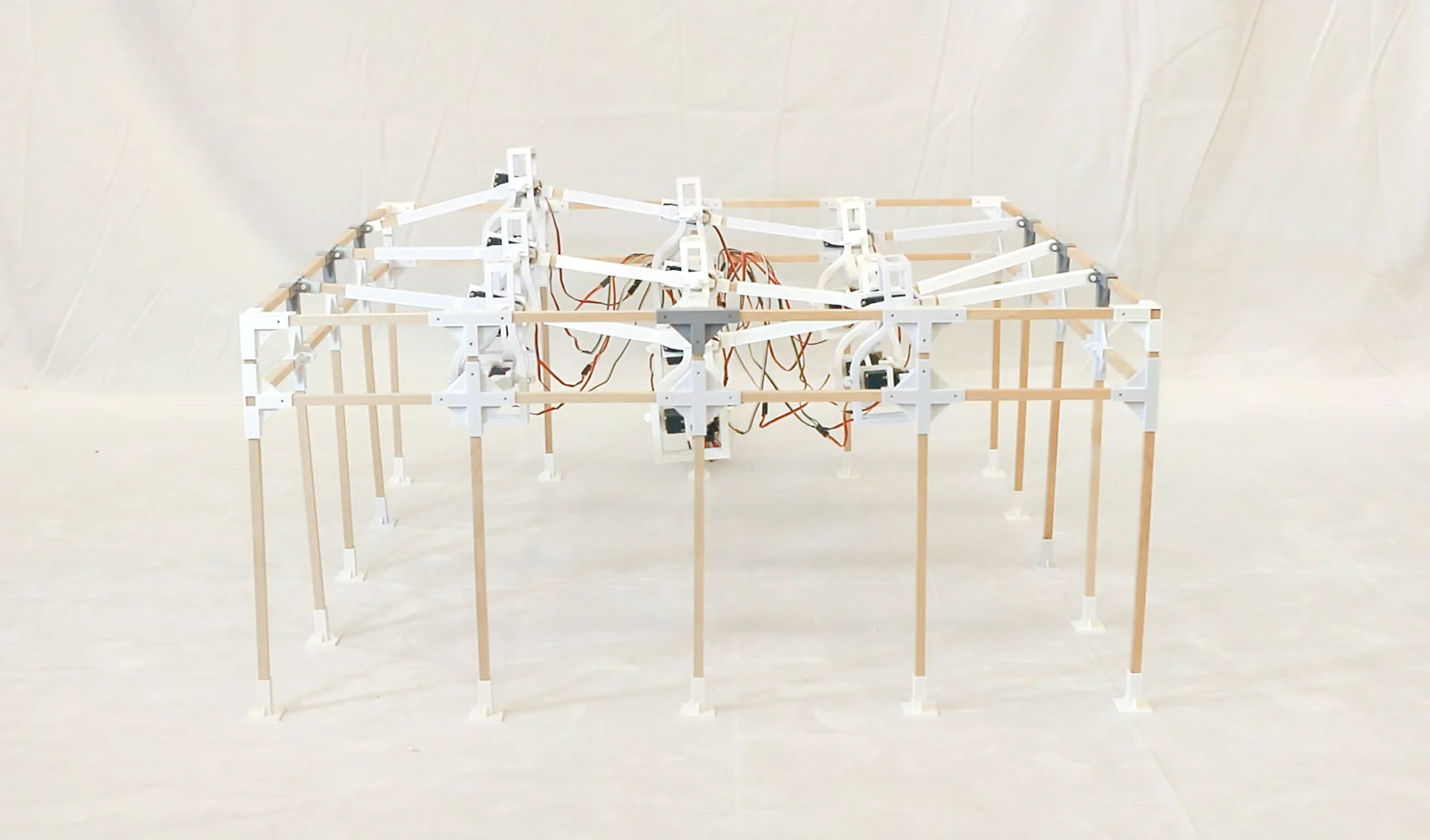
a surface that lifts itself. a grid of small robots, joined by beams, under one continuous skin.
- units
- 3 × 3
- motors
- 18
- cost
- ≈ $300
01
see it move
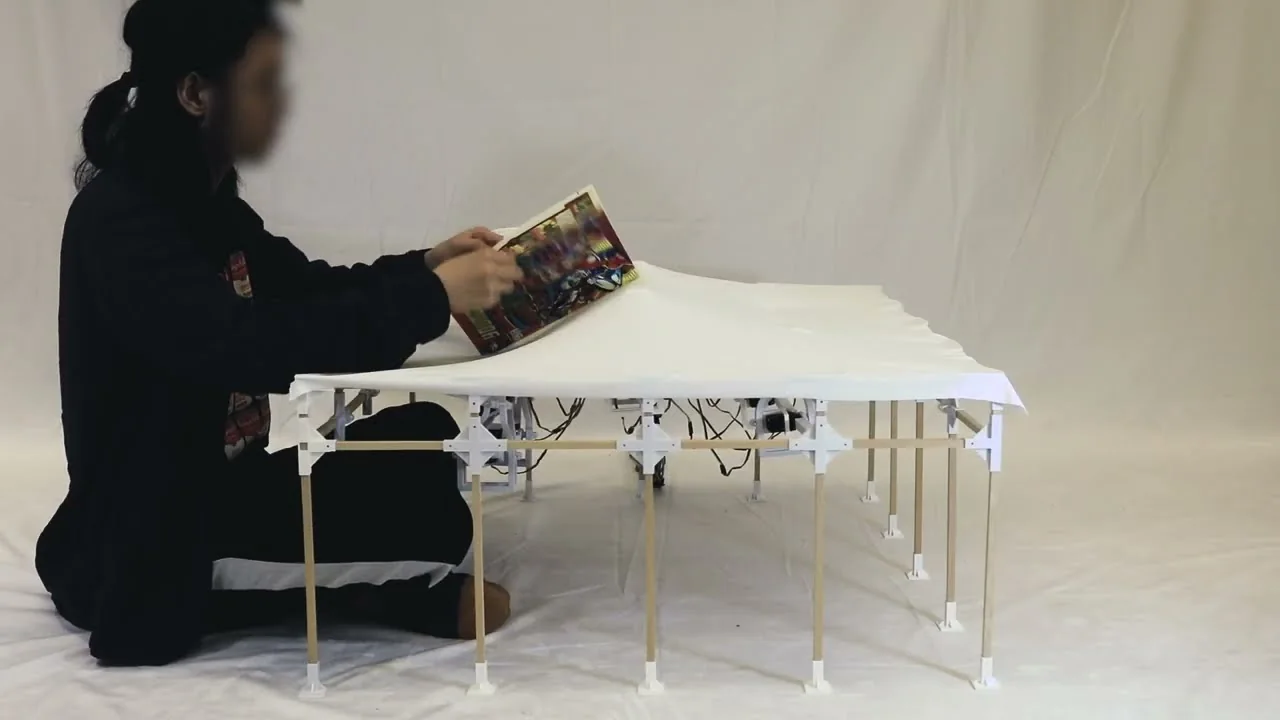
the prototypes as a table, a bed, a roof, a storage box and a vr terrain.
02
a reshaping surface
a surface is the simplest thing in a building. what if it could reshape itself into whatever the room needs?
pin-based displays
Each pin is pushed from below, so the actuators fill a base under the surface. Dense and precise, but the space underneath is taken.
robotecture
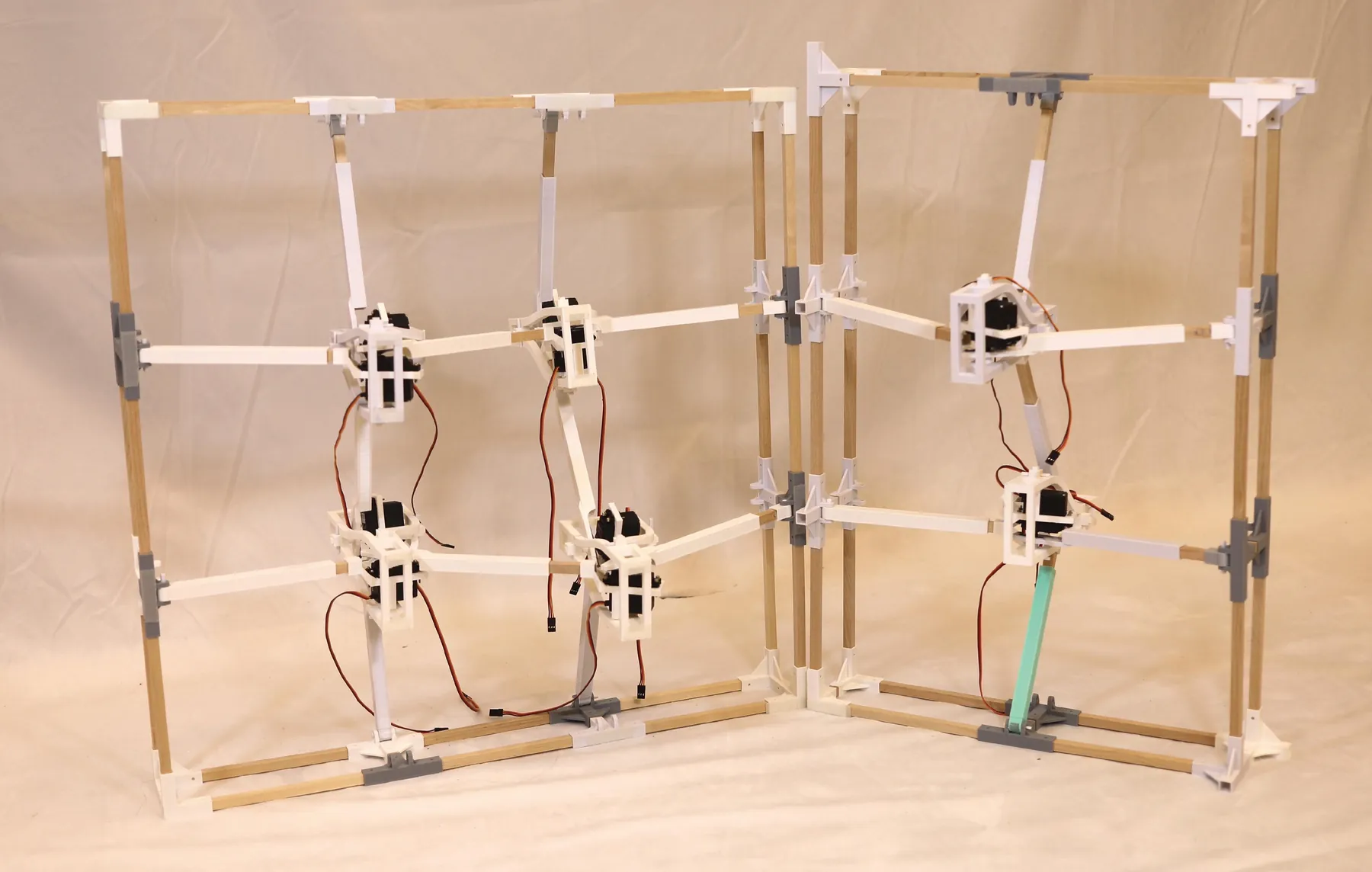
The units lift themselves by turning the beams between them, so the whole mechanism is one flat layer. The space on both sides is free, and objects can pass through the gaps.
03
drive it
the 3 × 3 prototype, at its real proportions: 20 cm cells, two motors in every unit, a fabric skin on top. pick a scenario, or grab a unit.
the real onethe 3 × 3 skeleton, without its skin, changing shape
a model of the prototype: heights move at the servos’ pace (any shape in about 1.3 s, as measured), and no unit can rise more than one cell above a neighbour, because the beams stop at 45°. The angles come from the paper’s equation. Where a beam reaches that limit it turns orange.
04
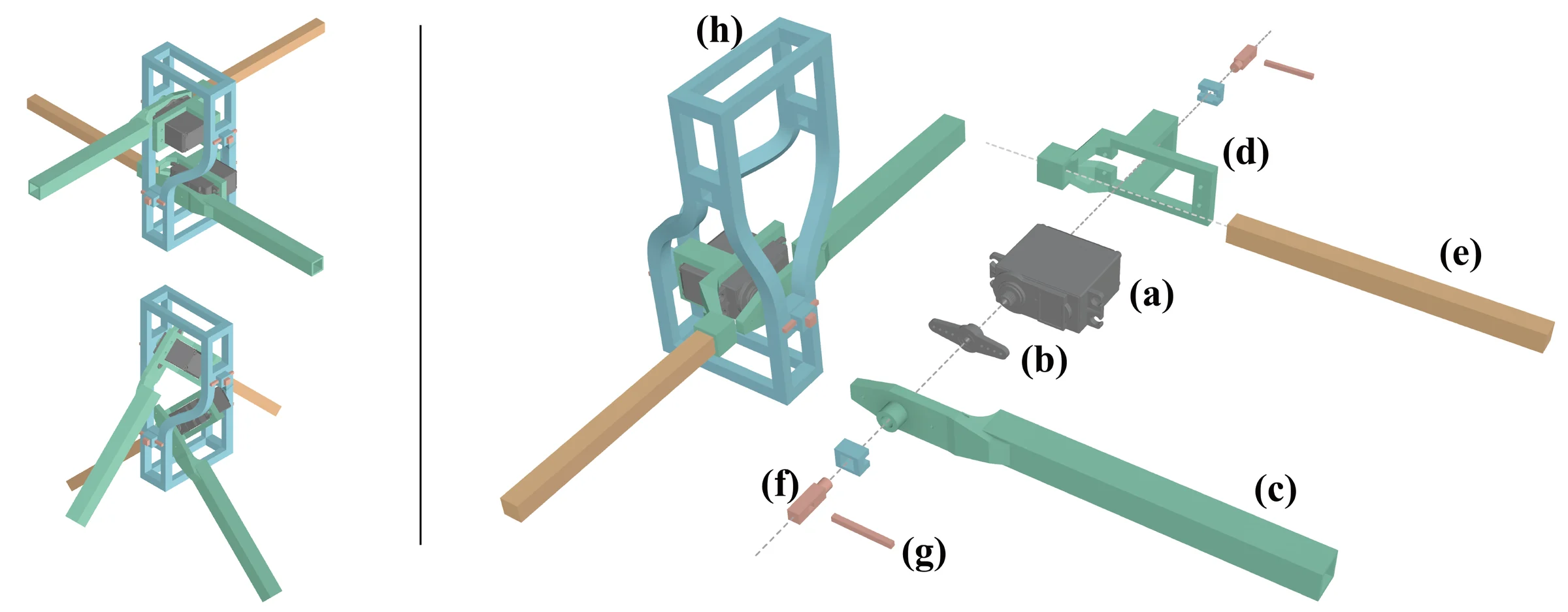
how a unit lifts itself
one line of the grid, in section. a motor turns the joint between its two beams; the beams push against the neighbours, and the unit rises. drag a unit.
for the selected unit
- a
- b
- c
- l
- 20.0
α₁ = atan( l ⁄ (b − a) )
α₂ = atan( l ⁄ (b − c) )
α = α₁ + α₂
heights in cm. The motor turns its joint to α. 180° is level; the mechanism allows 90° to 270°, so a unit can never be more than one cell (20 cm) above or below a neighbour, and its full range equals its distance to the frame. The beams telescope as the angle changes: watch their lengths.
05
three units, one design
simple, efficient, robust: each round removed something.
-
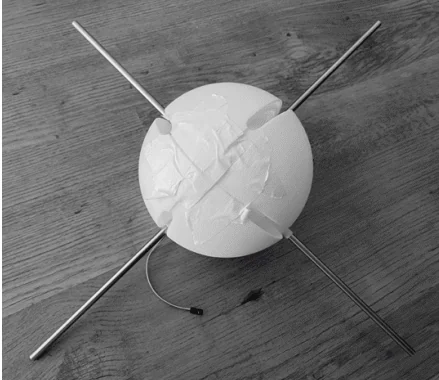
v1 · overlapping joints
a sphere
Four beams met at the centre of a sphere, guided by a ring gear inside it. Elegant from outside, but the printed PLA sphere deformed within days, and the crowded inside left no room for strong motors.
-
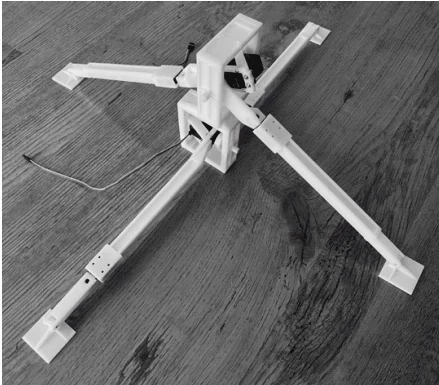
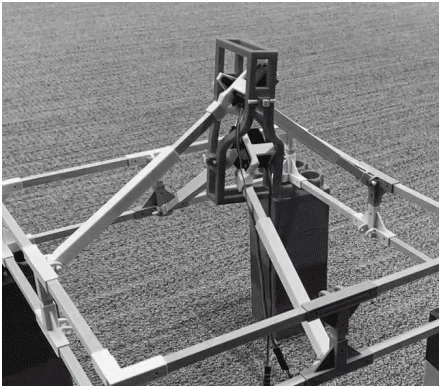
v2 · independent layers
beams in layers
Beams from the two directions stacked in different layers, with no ring gear. It worked, but it was fragile. One version put a camera on every unit, so people could “grab” a unit in the air and pull it up or down.
-
v3 · the final unit
stronger, simpler
A stiffer chassis, larger MG996R motors, lighter and stronger beams, and upgraded power and frames: stable enough to grow into larger grids.
06
like lego, at room scale
every unit is identical. add one by joining its beams to the grid; the frame is built from modular parts too.
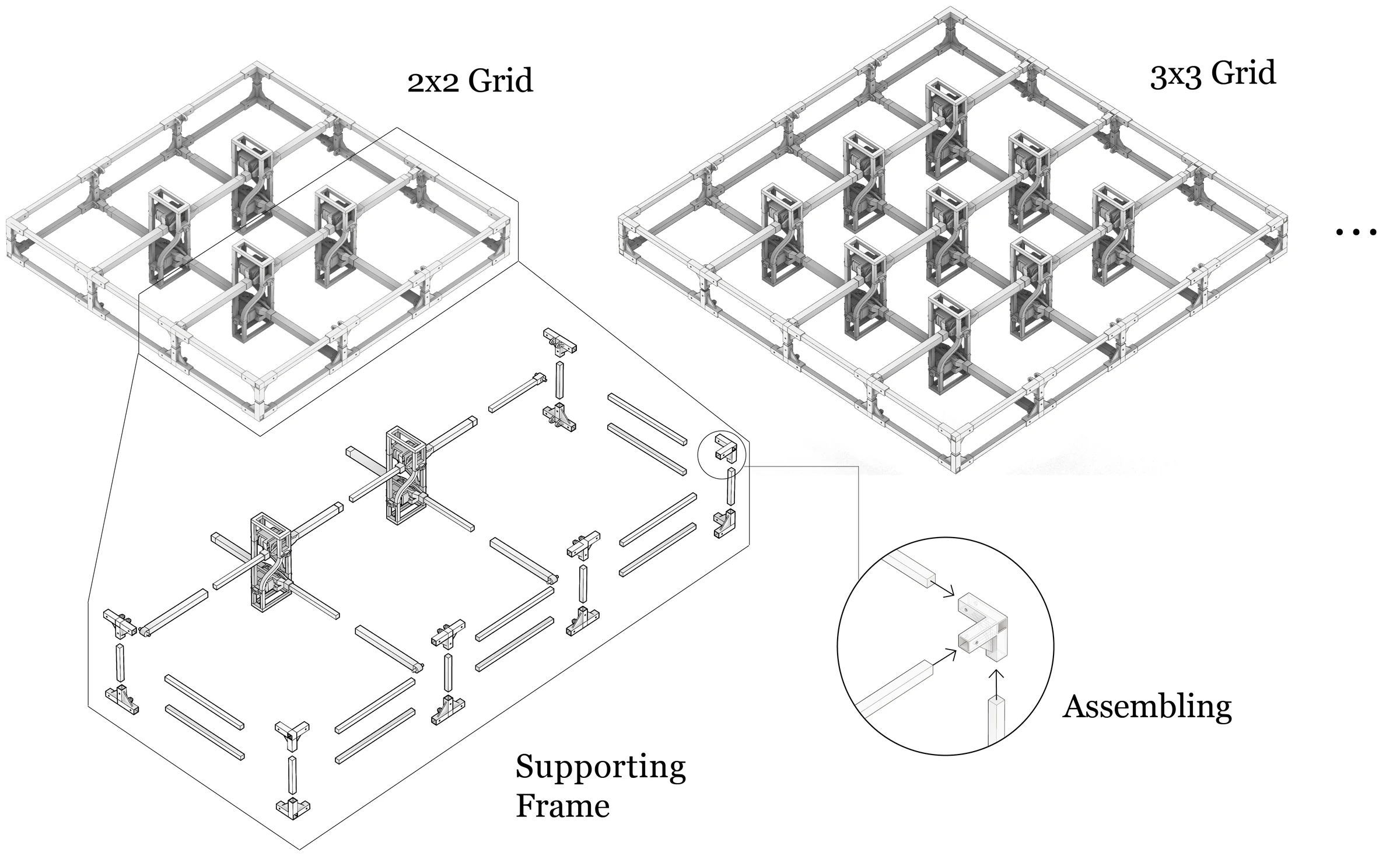
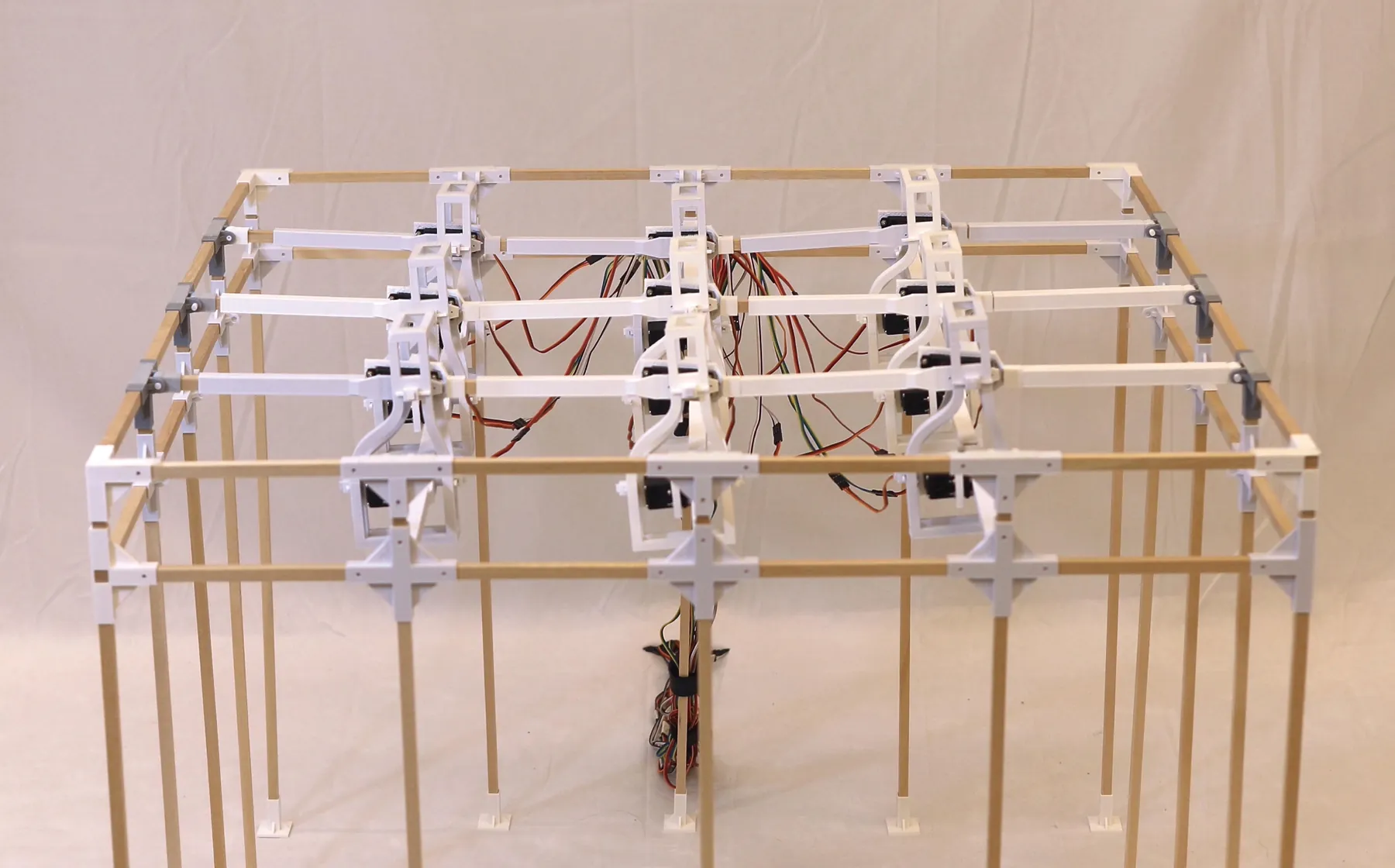
control
a laptop computes the shape and the angles; an arduino sends them to eighteen servos.
Applications run in Unity and WebXR. Over serial, an Arduino UNO receives each unit’s height and drives the motors through two 16-channel PCA9685 boards. A 12 V, 50 A supply feeds two 6 V, 25 A converters and the distribution boards.
07
by the numbers
measured on the prototypes.
- one unit weighs
- 218g
- one unit lifts
- 1kg
- height range
- ±20cm
- any shape in
- 1.3s
- motor torque
- 1.47N·m
- cell
- 20cm
- per unit
- <$25
- 3 × 3, all in
- ≈$300
what a unit costs
- printed chassis, bases, tubes
- $10
- 2 × MG996R servo
- $9
- wooden beams
- $1
- one unit
- under $25
- Arduino, power, wiring
- $60
- outer frame
- $30
- 3 × 3 system, 85 × 85 cm
- ≈ $300
how much each unit can carry
Max load in kg, measured on the 3 × 3. Every unit lifts itself, so the outer units also carry the inner ones: the centre bears least.
0.4 0.6 0.8 kg
Estimated for larger grids, from the torque balance: about 0.4 kg at the centre of a 4 × 4, 0.26 kg for a 5 × 5.
08
what it becomes
enclosures, surfaces you touch, and objects it handles: the scenarios built with the 1 × 2, 2 × 2 and 3 × 3 prototypes. most can run on the model above.
aarchitecture: enclosures that adapt
opera house
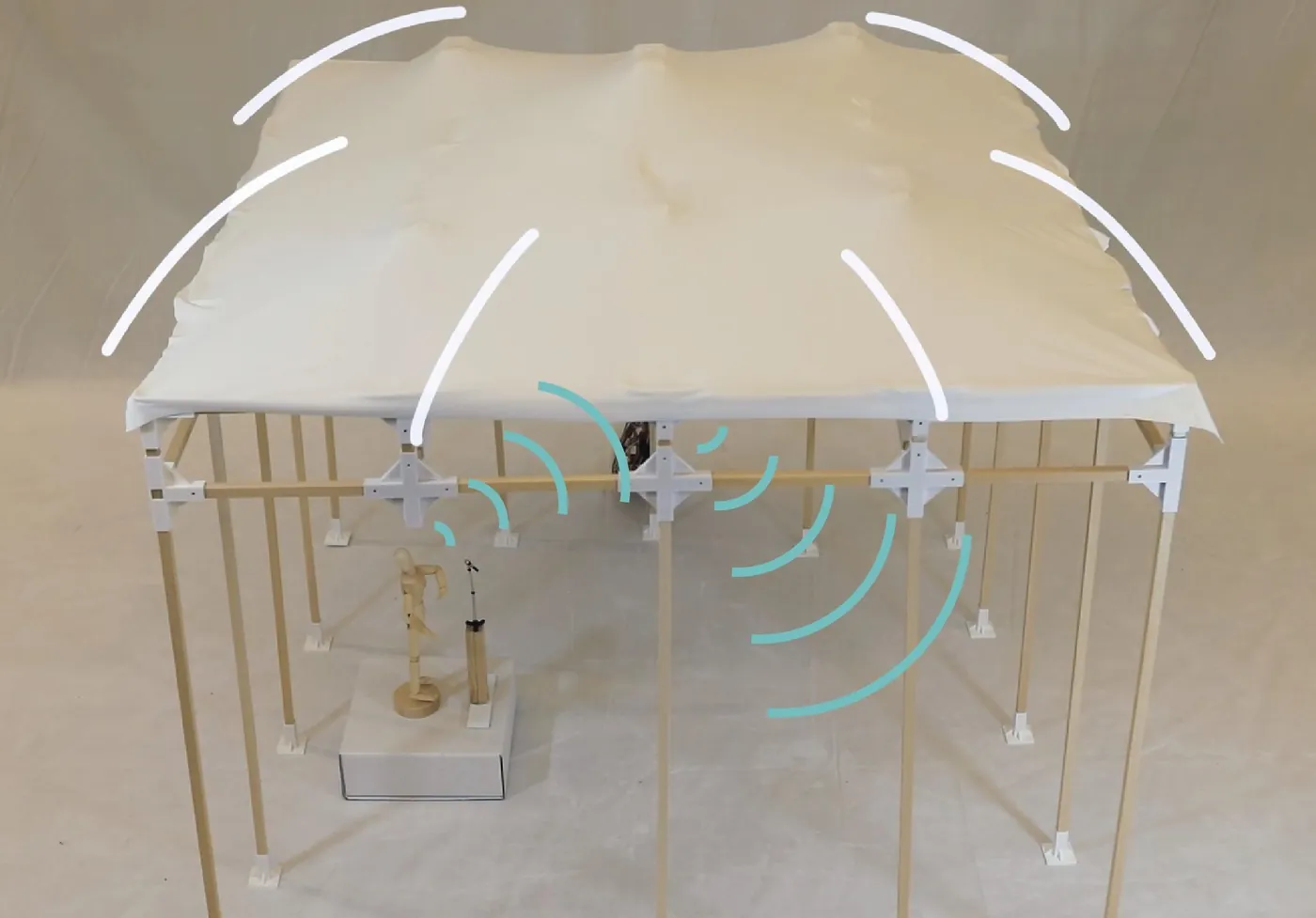
The ceiling rises into a dome to reflect the singer’s voice to the audience.
a ceiling within reach
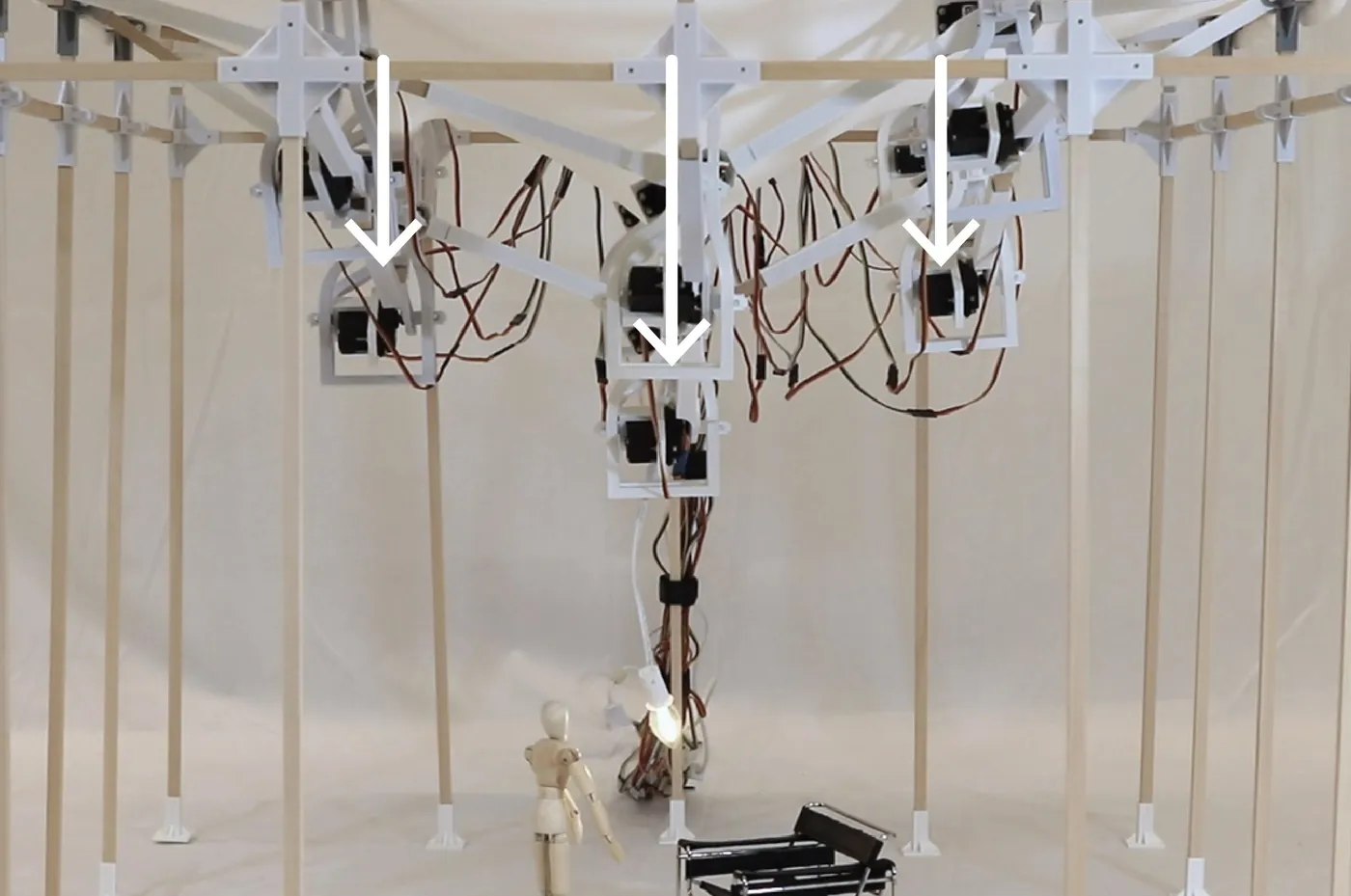
The node holding a broken light bulb comes down to be changed; the same for paintings or anything stored overhead.
solar roof
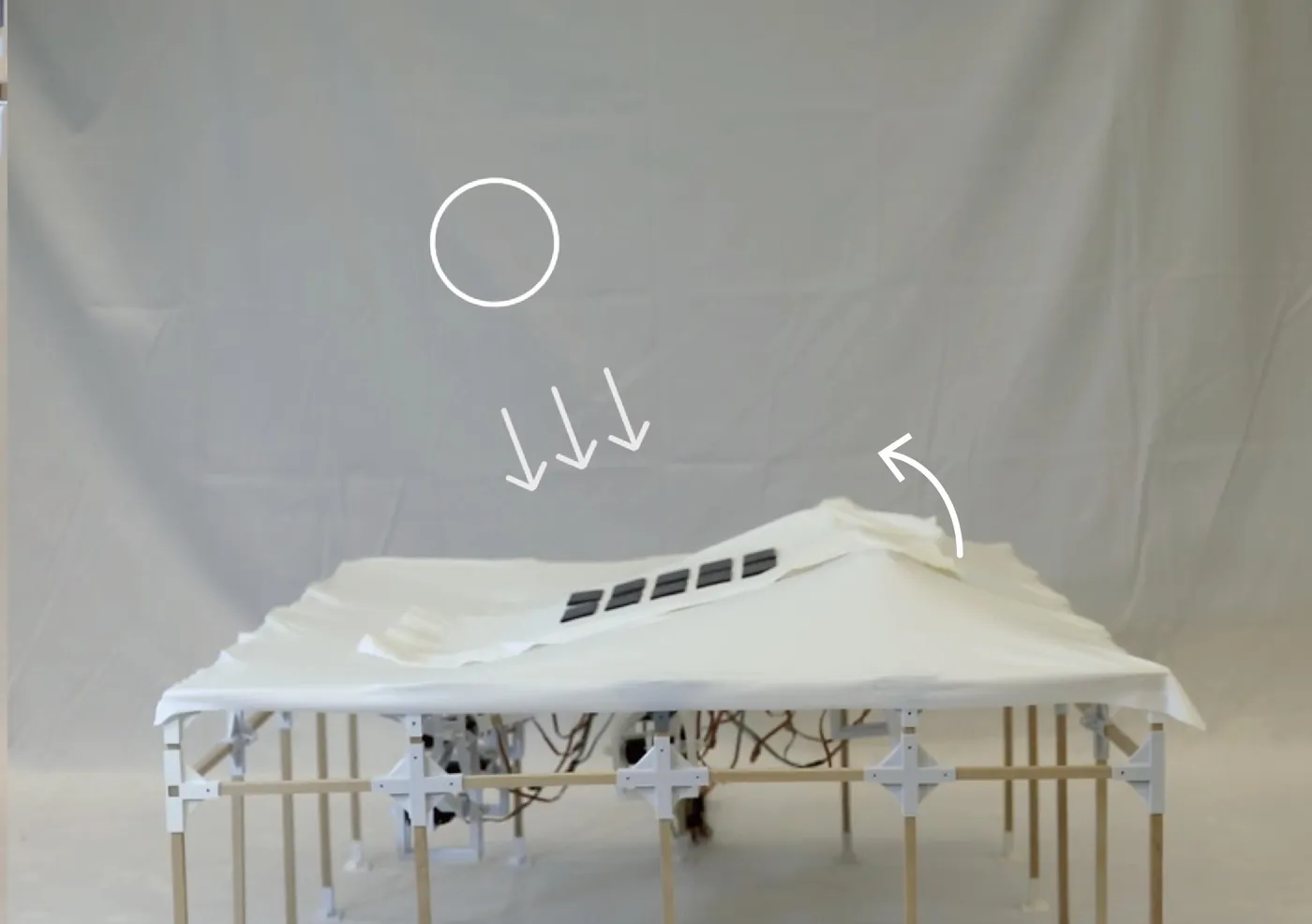
The roof follows the sun’s direction, so its panels collect more energy.
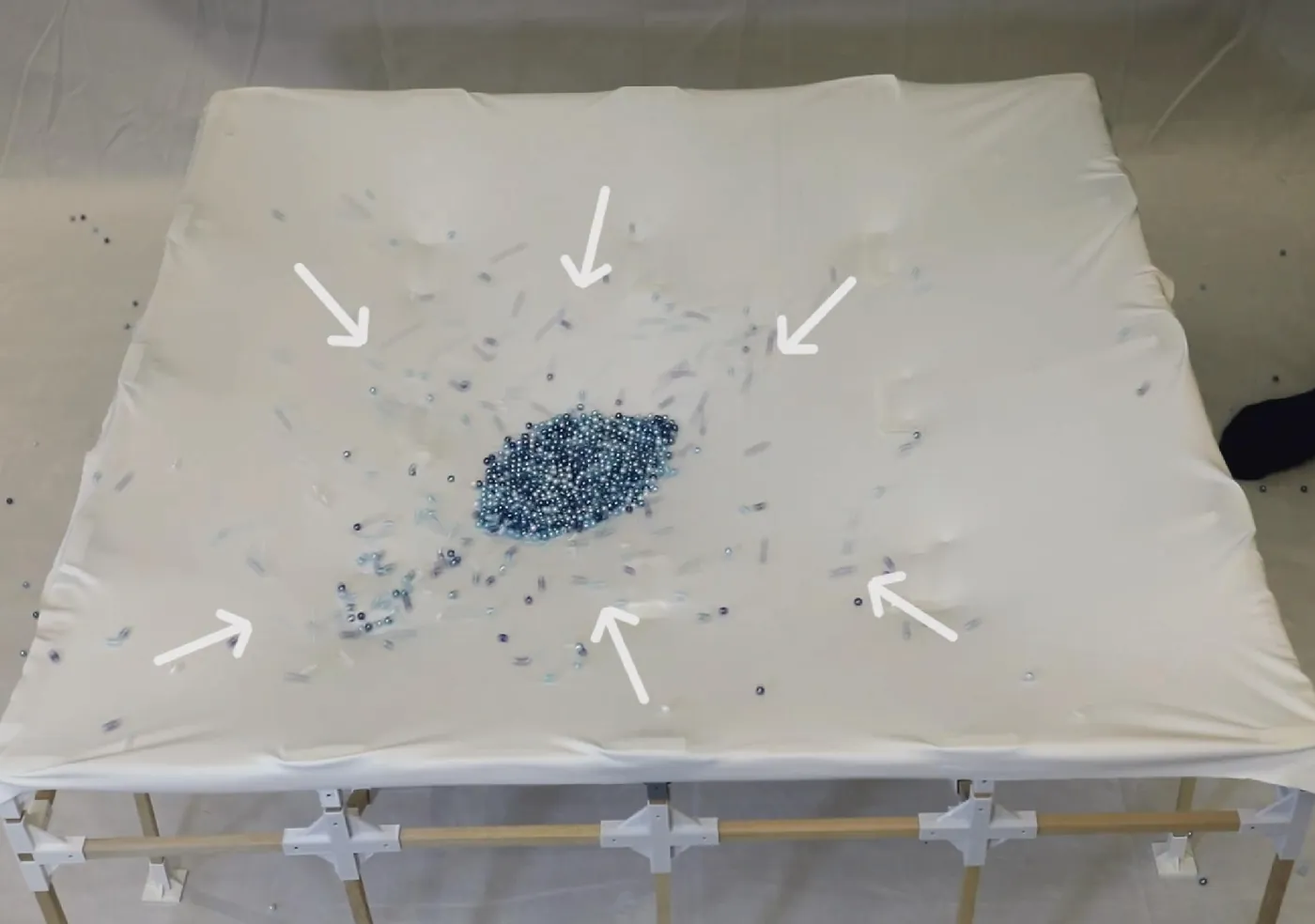
rain collection
When it rains, the roof dips in the middle and gathers the water. Beads stood in for rain.
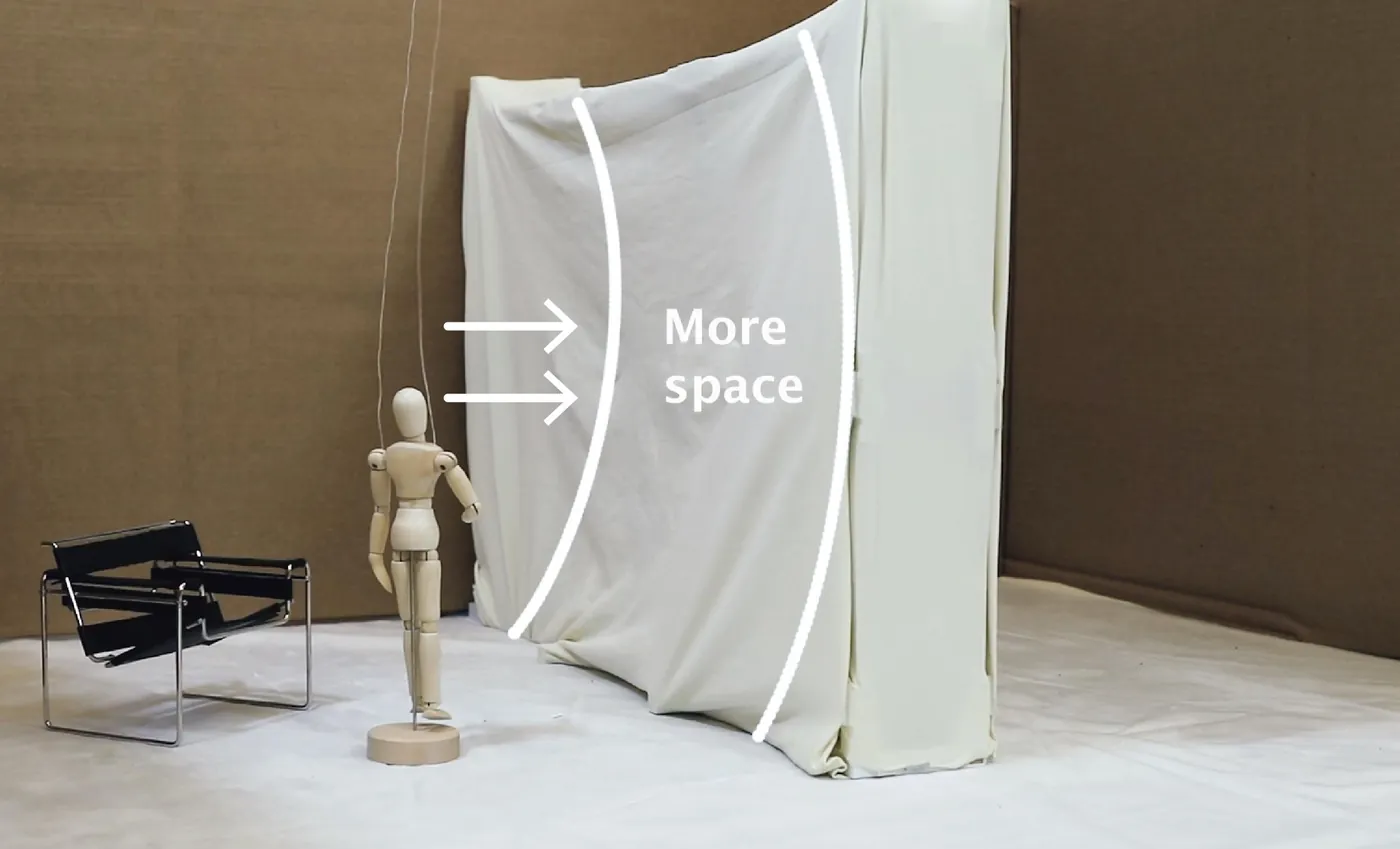
a wall that moves
A 1 × 2 standing as a wall between two rooms: it recedes from the occupied room to give it more space.
bsurfaces you touch: furniture and haptics
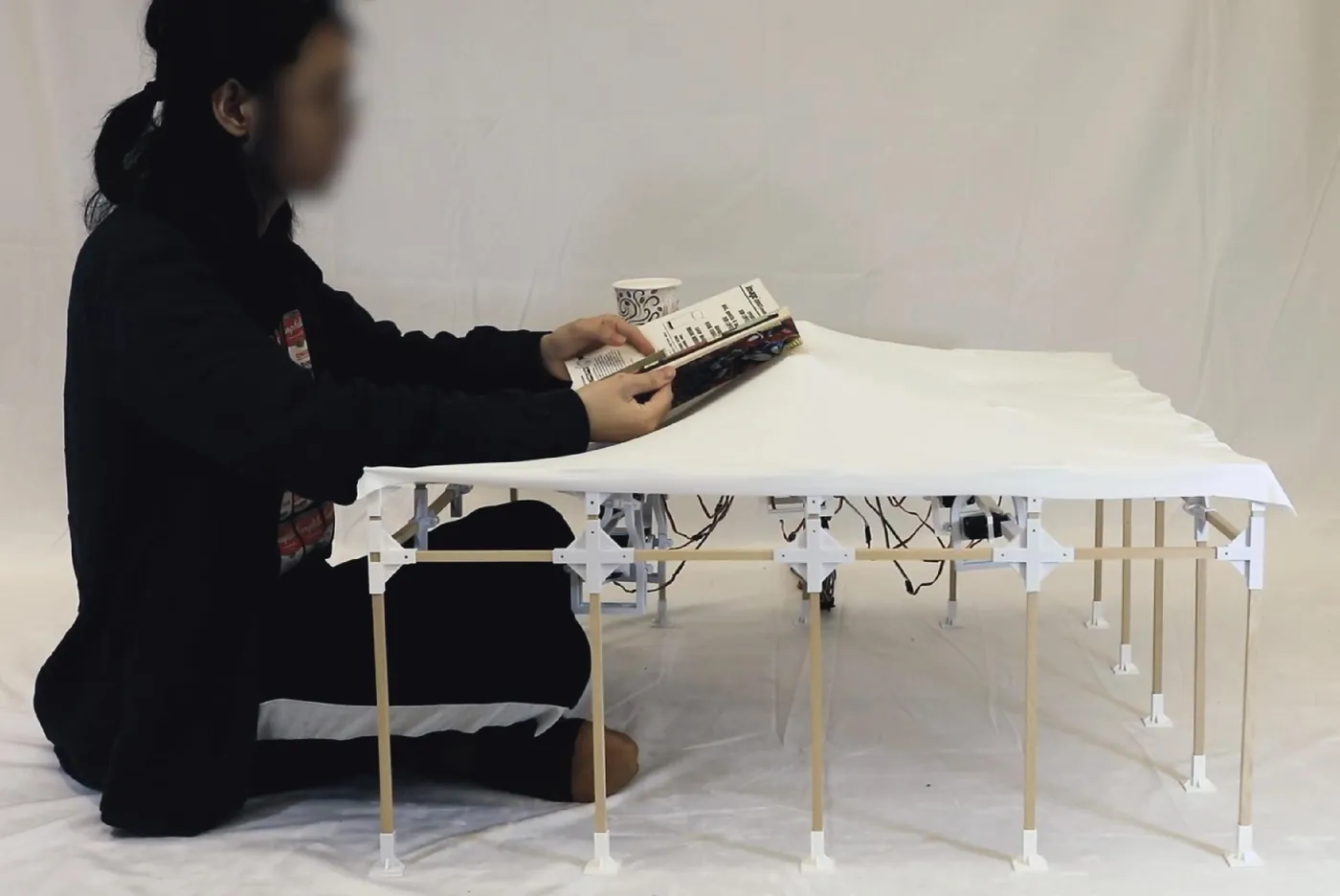
reading table
Put a book on it, and the table lifts a slope under it for easier reading.
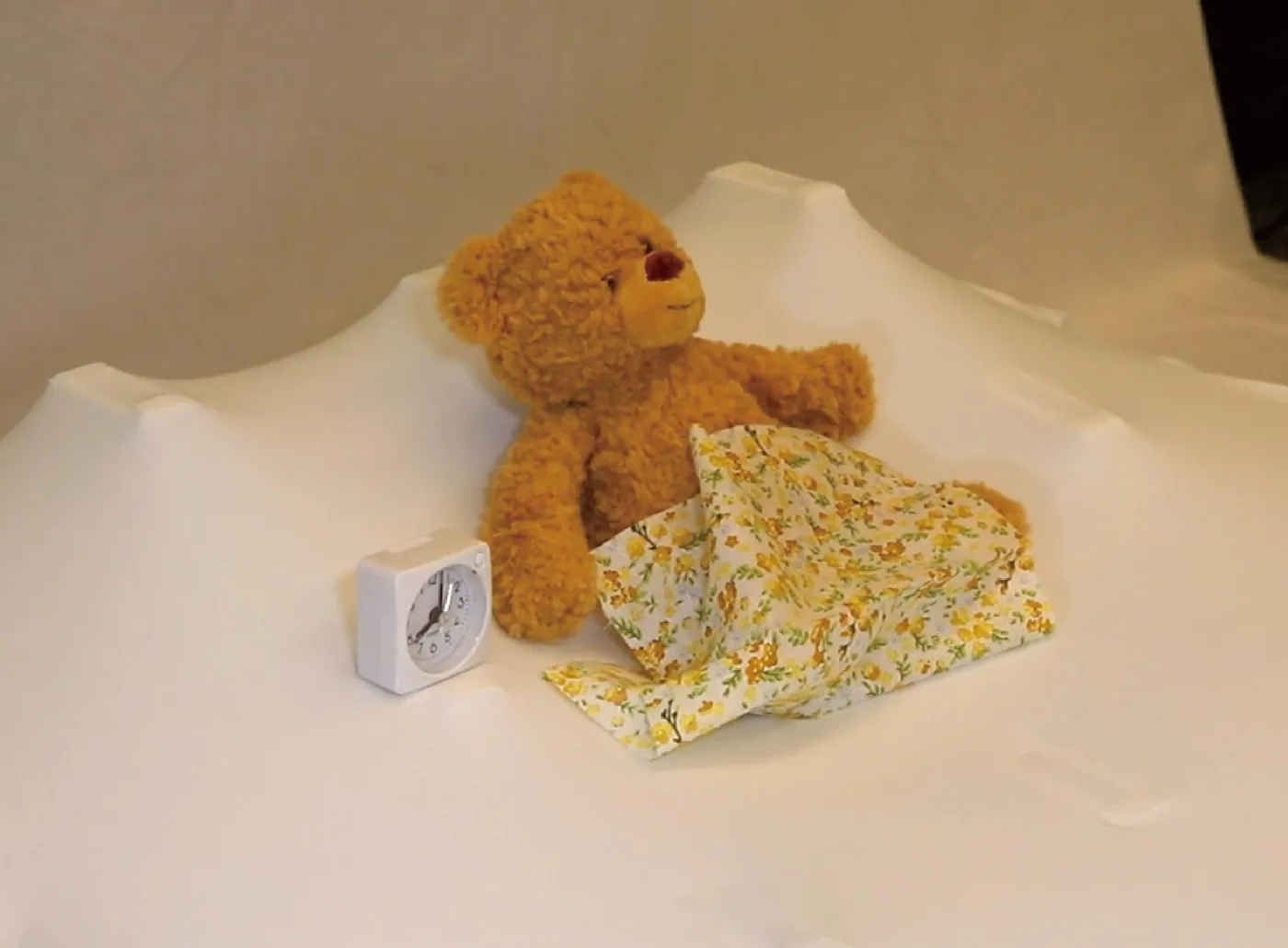
a bed that wakes you
When the alarm rings, the bed folds into a chair and sits you up. With pressure sensing, it could fit the body it holds.
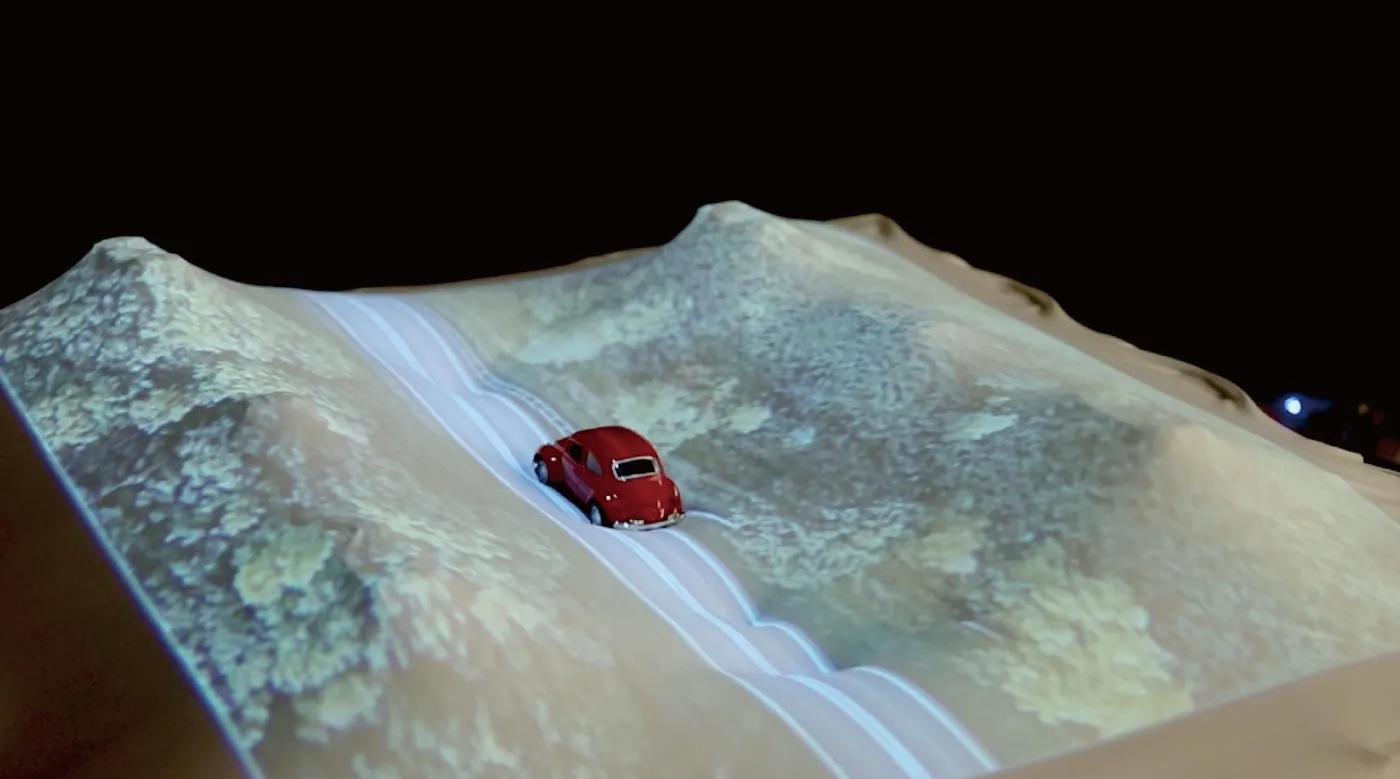
terrain, projected
A mountain road for a toy car: the surface makes the hills, projection mapping paints them.
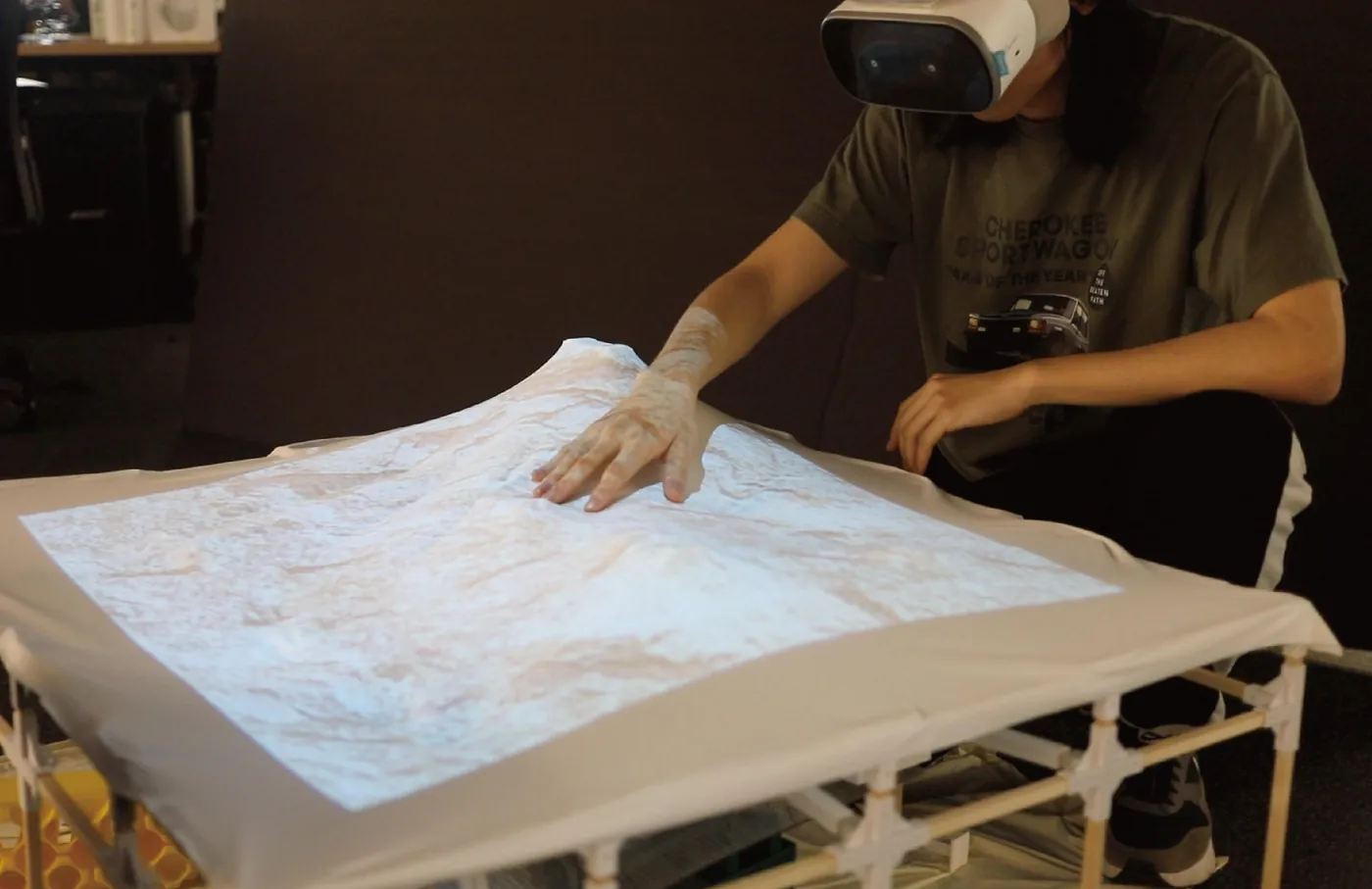
touch in vr
A rocky landscape in VR, shaped in the room: the hand finds the rocks where the eyes see them.
cobjects it handles
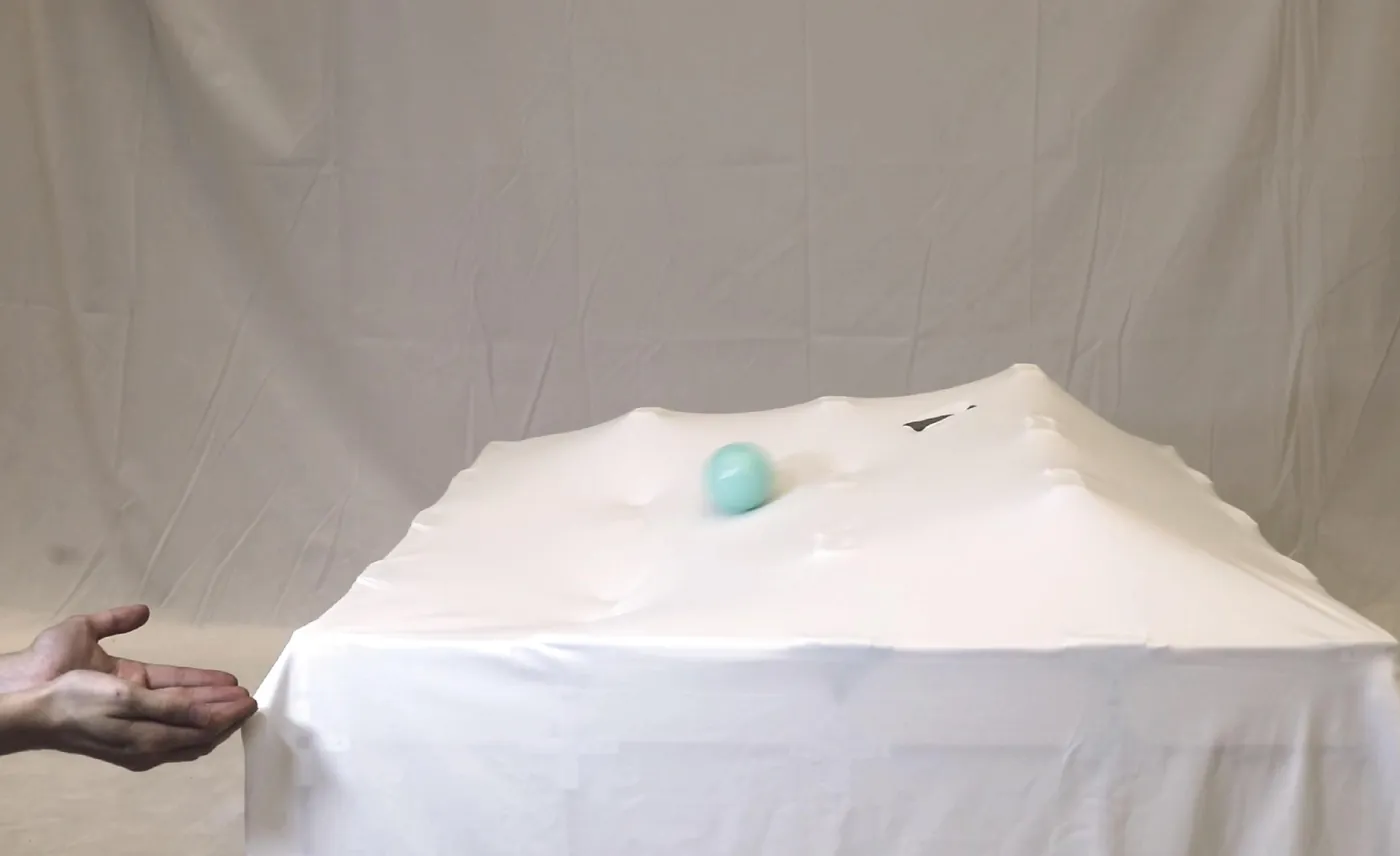
to your hand
The surface tilts and the ball slides toward the hand that waits for it.
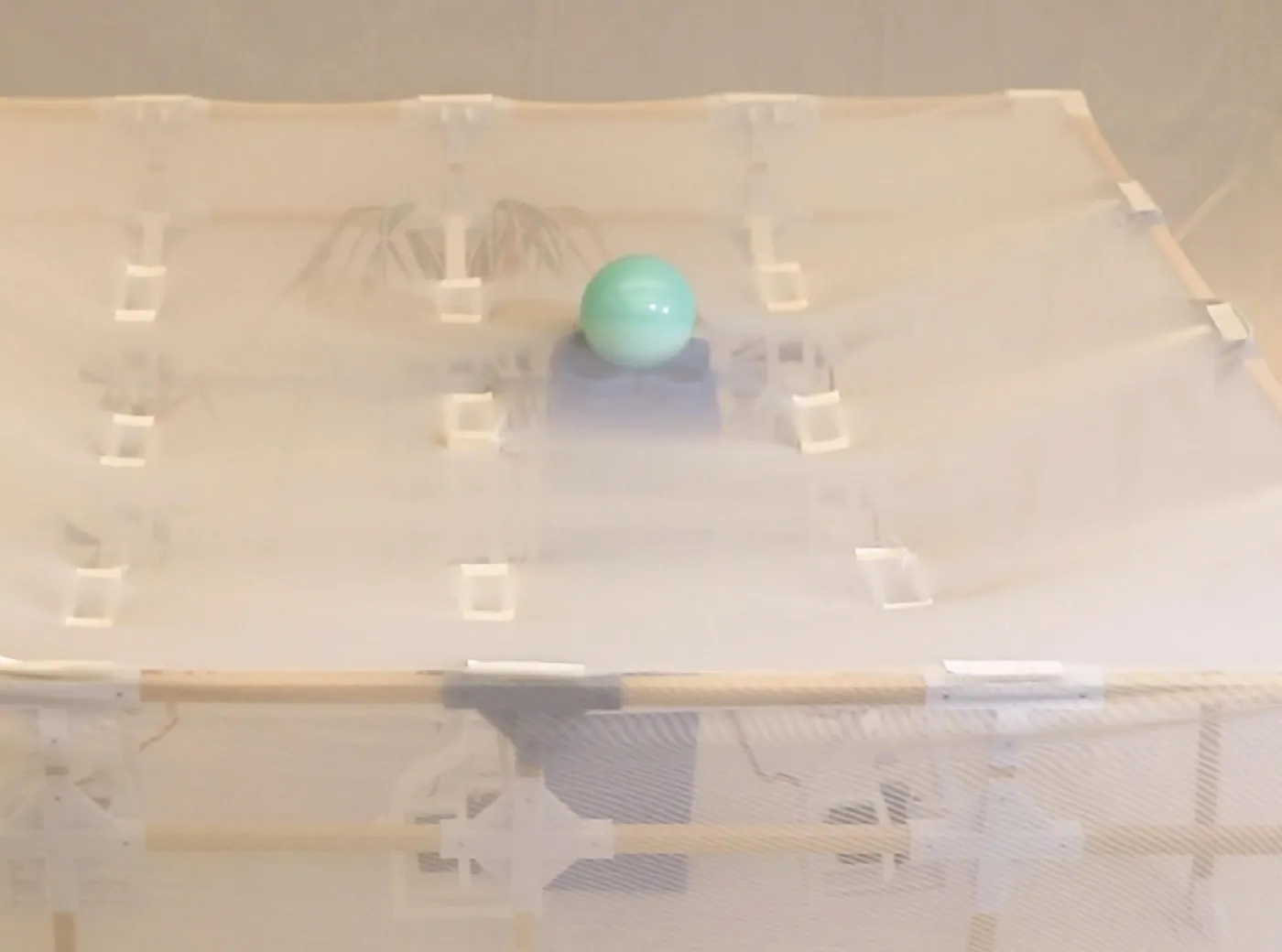
storage that hides and reveals
A 7 cm ball rests below the surface. When the beams lower, the slit in the fabric opens and the ball comes up through it; push it back down to hide it.
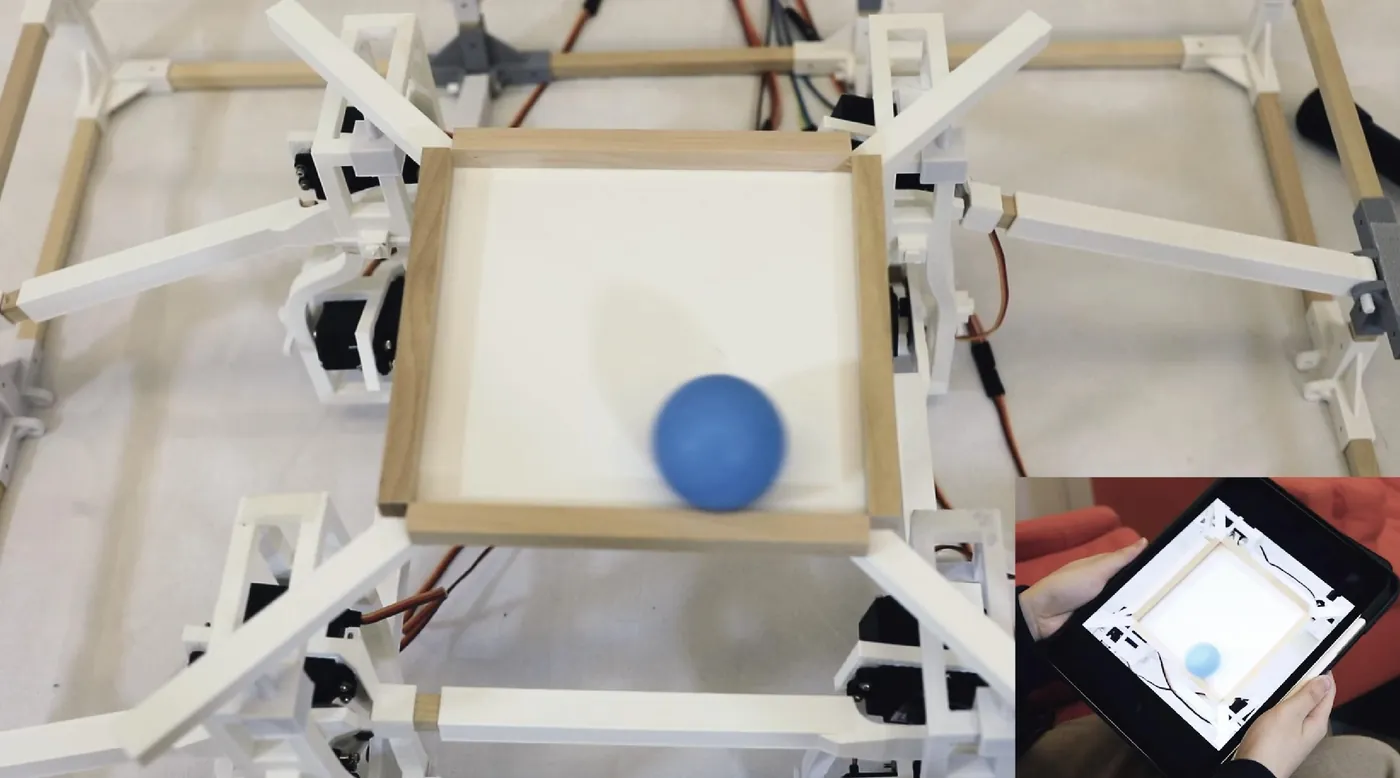
a maze, from far away
Over a network, a phone tilts the surface to roll a ball: tangible telepresence.
09
limits, and what’s next
what the prototypes taught, from the paper’s discussion.
height
The range is bound by the grid, and neighbours can never meet at a right angle. An origami-like unit could fold a floor up into a wall.
weight and sag
Self-lifting puts the most load on the outer units, and small play in every joint adds up as a sag at the centre. Smaller grids joined by rigid frames keep their strength; standing a grid upright puts the weight on the beams instead.
resolution
The MG996R sets the size of a unit. Smaller servos would make a denser grid, but a weaker one: Robotecture is meant for tables and rooms, not hand-held displays.
sensing
It shapes, but does not yet feel. Torque sensors on the motor shafts could let it read a push, or the shape of an object pressed into it.
the upgradeRDS5180 servos with aluminium or carbon-fibre beams: by the paper’s estimate, 1.2 kg at the centre of a 10 × 10 grid, for about $80 a unit.
10
tei ’25, bordeaux
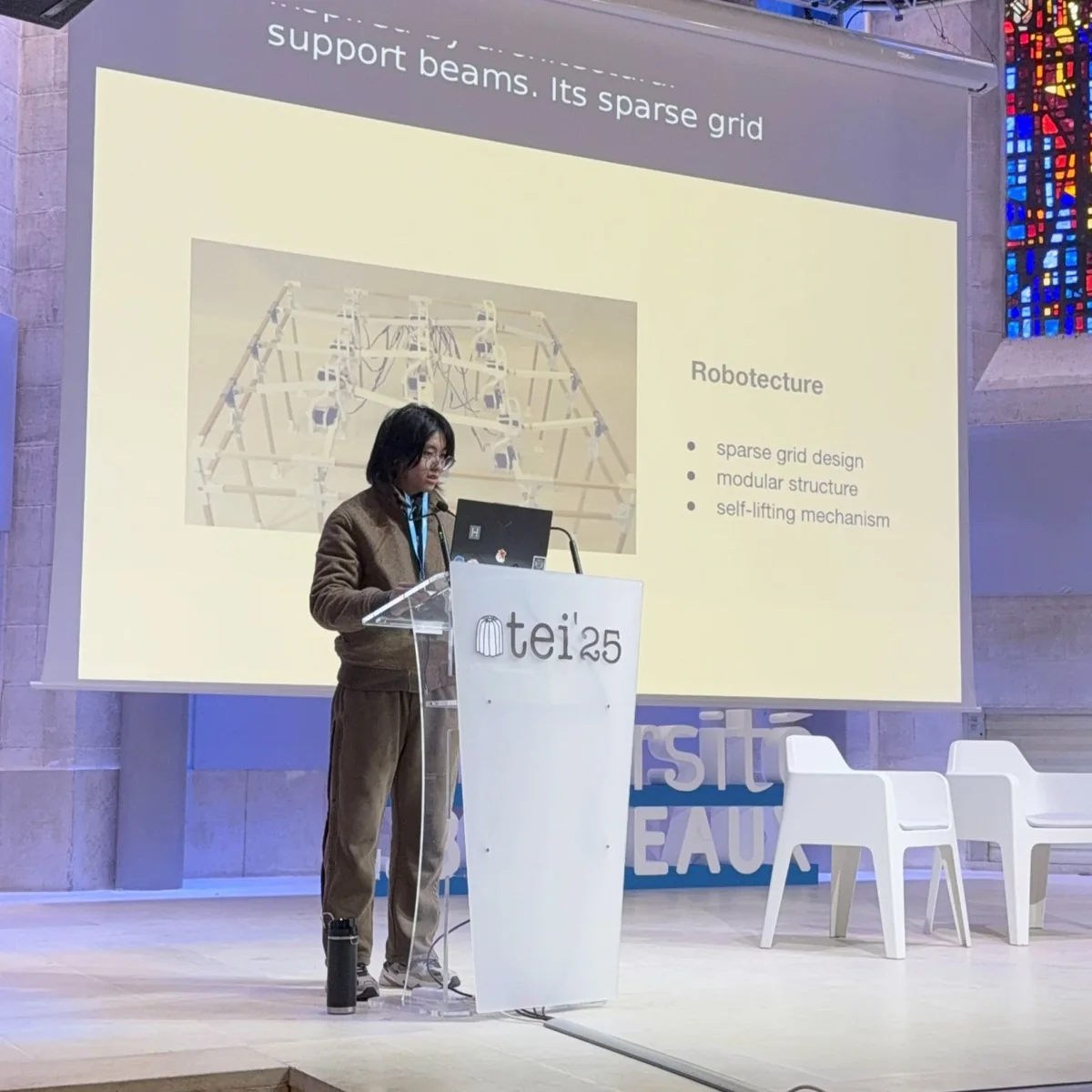
As first author, I presented the paper at TEI 2025, the International Conference on Tangible, Embedded and Embodied Interaction, in Bordeaux.
TEI is a leading conference in human-computer interaction for tangible and embodied interaction. It brings together new research from academia and industry on interaction design, hardware prototyping and immersive experience.
Yuhan Wang, Keru Wang, Zhu Wang and Ken Perlin. 2025. Robotecture: A Modular Shape-changing Interface Using Actuated Support Beams. In Nineteenth International Conference on Tangible, Embedded, and Embodied Interaction (TEI ’25), March 4–7, 2025, Bordeaux / Talence, France. ACM.
- time
- 2023–2024
- lab
- Future Reality Lab, Courant Institute, NYU
- team
- Yuhan Wang, Keru Wang, Zhu Wang*, Ken Perlin* * equal advising
- published
- TEI ’25, ACM